What Is a Public Affairs Maturity Model?
Public affairs maturity shows how well your team turns policy information into action and measurable results. Use this five-tier model to find where your team stands and choose the next workflow to improve.
Public Affairs Maturity Tiers
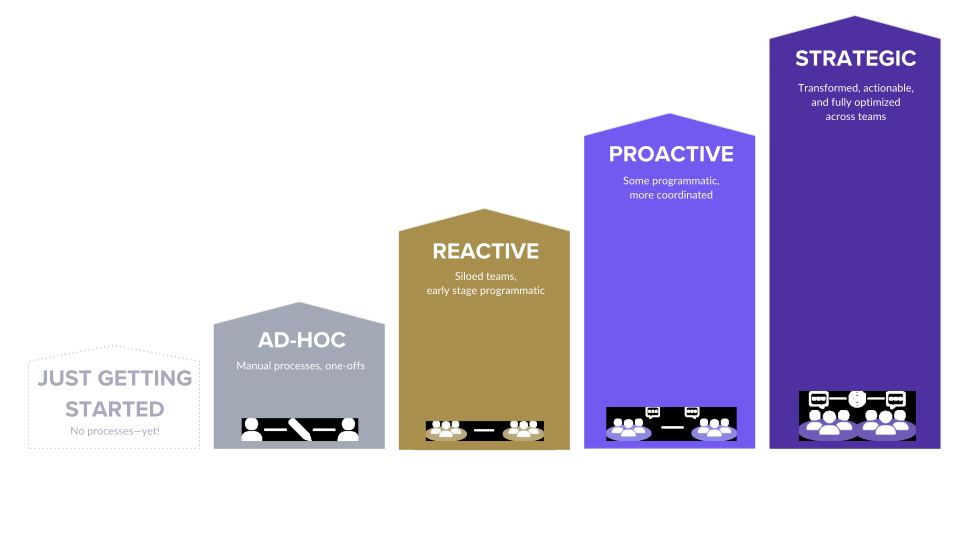
What Are the Five Tiers of Public Affairs Maturity?
The five tiers are Starting, Ad Hoc, Reactive, Proactive, and Strategic. Teams advance by replacing scattered work with shared data, clear owners, repeatable workflows, earlier action, and better reporting.
| Tier | What It Looks Like | Best Next Step |
|---|---|---|
| 1. Starting | Goals exist, but systems and owners are still taking shape. | Define your issues, sources, owners, and actions. |
| 2. Ad Hoc | Work gets done through manual steps and disconnected tools. | Build one shared, repeatable workflow. |
| 3. Reactive | Your team catches key developments and responds on time. | Use patterns and early signals to act sooner. |
| 4. Proactive | Your team plans outreach before an issue becomes urgent. | Connect policy, relationships, and outreach. |
| 5. Strategic | Shared data and workflows support wider business goals. | Measure results, improve the system, and expand with care. |
Maturity can vary by task. Your bill tracking may be strategic while your meeting records remain ad hoc. That is normal. Review each key workflow. Then improve the one that creates the most risk or takes the most time.
Tier 1: Starting
Build a clear process before adding more tools. Decide:
- Which issues and jurisdictions matter most?
- Who owns each issue?
- Which updates require attention?
- What action should follow?
Your answers show what data you need. A federal team may use Quorum Federal to follow bills, rules, hearings, and congressional dialogue. A multistate team may use Quorum State to track bills and rules across state legislatures.
You also need a place to record relationships and past contact. Quorum Stakeholder helps teams keep contact records, meeting notes, and engagement history in one place. That shared record prevents useful context from living in one person’s inbox or memory.
Build the smallest useful workflow
Do not try to track every issue at once. Pick one priority and map the path from policy update to team action. Test the process for a few weeks, then adjust the owners, alerts, or fields that cause confusion.
The goal at Tier 1 is consistency. Your team should know where information comes from, where it goes, and who acts on it.
Tier 2: Ad Hoc
Replace one fragile manual process with a shared workflow. Start with the task that wastes the most time or creates the highest risk of a missed update.
You may be at this tier if:
- Team members repeat the same research.
- Meeting notes stay in inboxes or personal files.
- Bill updates require manual checks.
- Reports take hours to rebuild.
- One person knows where everything lives.
Choose one workflow and name its trigger, owner, action, and result. A bill alert might lead to review, a priority tag, an assignment, or outreach to a key staffer.
AI can help your team move past manual work. Quorum Agents can handle set tasks such as reviewing bills, preparing meeting briefs, and updating CRM records. Your team sets the goals, checks the work, and makes the final decisions.
Learn how the CRM Agent captures meeting notes and makes relationship history easier to find.
Tier 3: Reactive
Use the data you already collect to spot patterns before an issue becomes urgent. A reactive team catches key updates; a more mature team knows what those signals might mean.
Several officials using the same language may show that a message is gaining support. Similar bills moving across states may signal a wider trend. A change before a Crossover Deadline may shift which groups need attention.
Quincy, Quorum’s AI-powered assistant, can summarize policy documents, compare proposals, and answer questions about information in Quorum. Use the answer as a faster starting point, then check the source and keep the final call with your policy team.
Set a short list of signals that should trigger review. Then plan the likely response: brief leadership, contact swing-vote staffers, prepare coalition partners, or draft a public message.
Spot Signals Before They Become Urgent
Learn how Quincy reviews a state committee transcript, identifies which lawmakers raised concerns, and summarizes the themes your team may need to act on.
Tier 4: Proactive
Connect policy tracking, relationships, and outreach so one signal can start a planned response.
If a committee schedules a markup on a priority bill, a proactive team can review the latest text, identify key committee members, check past meetings, brief leaders, and plan outreach before the vote.
If public support will help, Quorum Grassroots can connect the policy update to an advocate campaign. The action might ask constituents to write, call, share a story, or join a fly-in.
Quorum’s Meeting Prep Agent prepares a personalized brief with an official’s recent policy activity, your organization’s engagement history, and the context your team needs to plan the next ask.
This work depends on shared definitions and records. Agree on what priority, stance, relationship status, and outcome mean, and decide where meeting notes and campaign results belong.
See how Quincy and the Meeting Prep Agent bring policy and relationship context into official outreach.
Tier 5: Strategic
Tie public affairs work to business goals and report what changed. Strategic teams measure results, not activity alone.
Bill counts, meetings, and messages show effort. Leaders also need to know how that work reduced risk, improved access, prepared the organization, built support, or moved a policy goal forward.
Useful measures include response time, priority bills reviewed before key deadlines, growth in target relationships, advocate participation, and time saved on research or reporting.
Use Dashboards to give each internal audience the detail it needs. A policy lead may need bill status and assignments, while an executive may need the top risks, planned actions, and results. For external outreach, Impact Reports can show federal or state officials how your organization’s economic activity affects their districts.
Review core workflows each quarter. Remove noisy alerts, fix fields people skip, and check whether teams use the system in the same way. Add a new issue or jurisdiction only when it supports a clear goal.
Learn how Quincy connects related policy activity and engagement history across teams.
How Do You Move to the Next Tier?
Advance one workflow at a time:
- Choose a clear result, such as faster bill review or better meeting follow-up.
- Map what starts the work, who acts, where information lives, and what happens next.
- Fix the largest source of delay, duplicate work, or missing context.
- Compare time, coverage, adoption, or results before and after the change.
Do not chase Tier 5 for the label. Build the structure your goals require. A small team with clear priorities and reliable workflows can run a highly mature program.
Choose the Next Useful Step
Public affairs maturity grows when your team can repeat good work, share context, and learn from the result. Find the workflow that causes the most delay or risk. Improve it, then measure what changed. If you want to see how Quorum can support your next step, book a demo.
Frequently Asked Questions
What is public affairs maturity?
Public affairs maturity shows how well a team runs its policy work. A mature program uses clear goals, shared data, named owners, repeatable workflows, and useful measures to turn policy news into action and results.
What are the five tiers of public affairs maturity?
The five tiers are Starting, Ad Hoc, Reactive, Proactive, and Strategic. Teams move from basic systems to shared data and earlier plans. At the top tiers, they link public affairs results to business goals.
How do I assess my public affairs team’s maturity?
Review the goals, owners, data, steps, use, and results for each core workflow. Look at how your team tracks policy, manages contacts, plans outreach, records work, and reports impact. Your team may sit at different tiers across these areas.
How can a public affairs team move from reactive to proactive?
A team becomes proactive by using repeated questions, public statements, hearing schedules, amendments, and policy activity across jurisdictions as early signals. Set clear triggers for team review, then plan the briefing, outreach, coalition work, or advocacy action that should follow.
What does a strategic public affairs program look like?
A strategic public affairs program connects policy tracking, contacts, outreach, campaigns, and reports. Teams share data and terms, act from the same context, and measure results tied to business goals instead of counting work alone.
How can AI improve public affairs maturity?
AI can speed up tasks such as summarizing bills, comparing policy text, preparing meeting briefs, and organizing CRM notes. Teams should define the task, check the sources, review the output, and measure whether AI saves time while keeping people responsible for final decisions.
Does a small team need to reach Tier 5?
No. Maturity reflects how well a team supports its goals, not its size or number of tools. A small team can be highly mature when it has clear priorities, repeatable workflows, shared records, and measures that guide choices.